
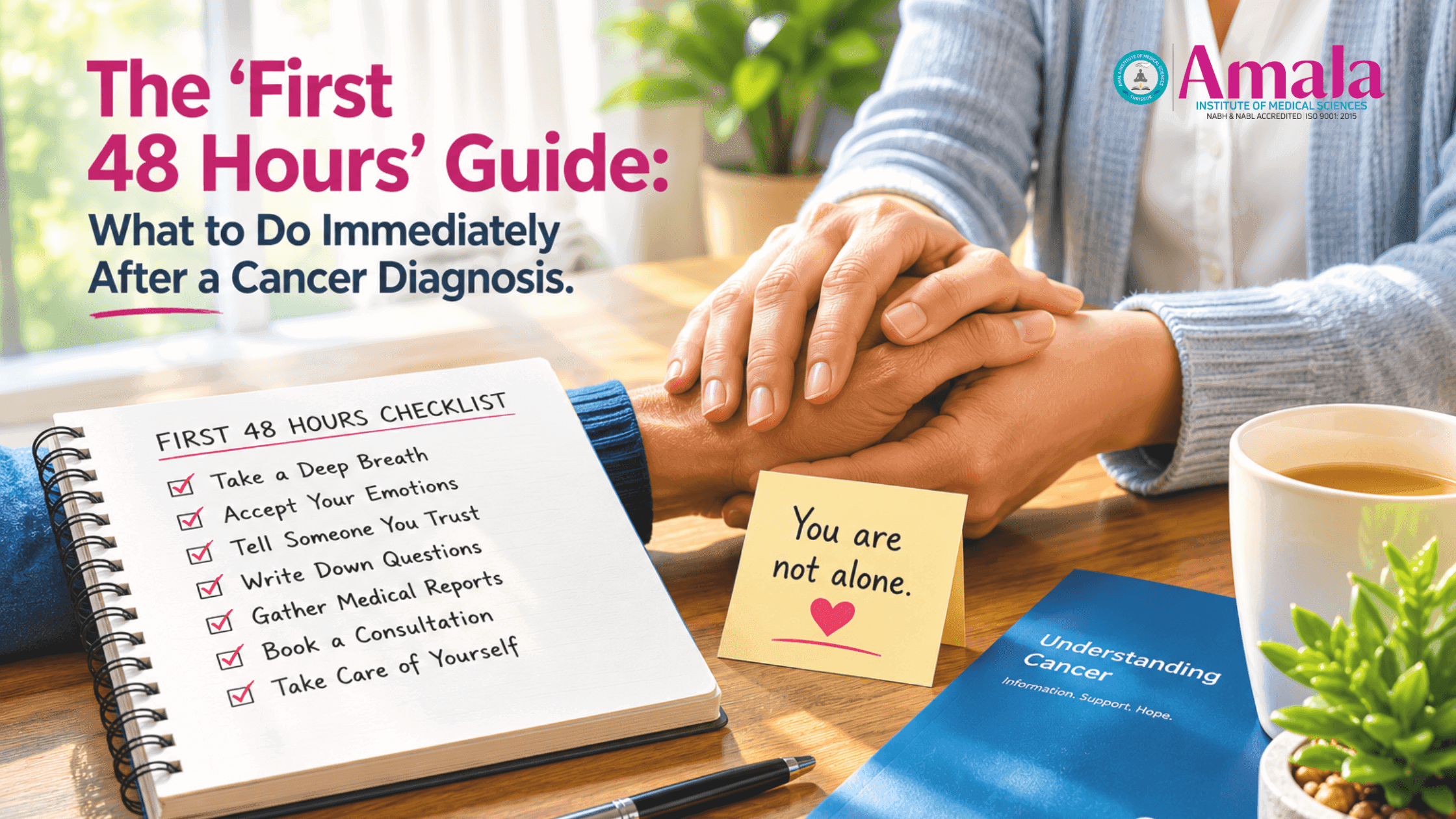
The "First 48 Hours" Guide: What to Do Immediately After a Cancer Diagnosis
Getting a biopsy report back with a positive result isn't something anyone can truly prepare for. The world can feel like it's collapsing in the initial moments. Everything around you may not make sense and your optimism feels useless. Even if you know, somewhere in the back of your mind, that cancer treatments have come a long way and that many cancers can be fully treated when caught at the right time — that knowledge doesn't always quiet the panic.
And that's absolutely normal.
All you need to remember is that you need not do it all alone. It feels like the world is stopping, but there is a whole community of people who have been exactly where you are. They found their way through the fog, and you will too. You will too.
Step away from the laptop. The internet is full of scary, outdated stories that don't know your case. Trust your doctors, not a search engine. Here's what Amala Cancer Center recommends doing in those critical first 48 hours.
Step 1: Pause for a moment before doing anything
The very first thing to do — before calling anyone, before opening a new browser tab, before anything — is to simply breathe.
Right after the diagnosis you may feel a sense of urgency to finalize the treatment and get through everything. But the next 48 hours are not about solutions. They're about steadying yourself, so you can think clearly when it matters.
Cancer is treatable, and you really have an opportunity to get real, genuine help. And the decisions you'll need to make are best made from a place of calm, not panic. Give yourself permission to feel what you're feeling and then, when you're ready, take the first step.
Step 2: Learn What You're Actually Dealing With
Once the initial wave passes, it's time to go back to your doctor (not Google) with specific questions:
- What type of cancer has been diagnosed?
- What stage is it at?
- What do my reports and scan results mean?
Get all your papers together, including clinical records like biopsy reports, imaging scans, and blood work. Go through these carefully, and if there is something that you do not understand, ask the doctor to explain it to you.
The more you understand about your diagnosis, the less scary it will be. Having proper knowledge about your condition will help you take informed decisions in relation to your medical care and treatment options.
Step 3: Not All Cancer Treatments Are the Same
Cancer is a broad term. There are hundreds of types, each with different treatment approaches, timelines, and outcomes. Your journey won't look like anyone else's because your case is unique. Your treatment plan will be built just for you.
One or a combination of the following may be recommended by your doctor:
- Chemotherapy
- Radiation therapy
- Surgery
- Immunotherapy — one of the most advanced and increasingly effective modern options
Ask about each of these openly. What are the benefits? What are the side effects? How does it apply to your specific case? You won’t feel hurried or overwhelmed when you are treated by an expert oncologist.
Whenever you feel confused or not sure about things you have been recommended then you can definitely seek a second opinion at one of the best cancer hospitals in Thrissur, AIMS. It isn’t considered as a sign of distrust but as a sign of wisdom.
Step 4: Finding the Right Specialist is important
No single doctor is equipped to treat all types of cancer and cancer care requires highly specific sub-specialization. Finding a specialist who has real, hands-on experience with your specific type of cancer can meaningfully change your treatment journey.
Look for someone who:
- Holds recognized, up-to-date qualifications in oncology
- Has a track record with your particular cancer type
- Explains things in simple language without reducing your doubts
- Is available and reachable for follow-ups, not just the first appointment
If you can, speak to other patients or read through reviews. A good oncologist is the one who makes sure that they just not treat the disease but the person sitting in front of them. When you are fighting something like cancer, a doctor who instils trust and comfort is a vital part.
Step 5: Have a Real Conversation About Your Treatment Plan
Once you've found your specialist, don't hold back. Bring your questions. Bring your fears. Ask everything:
- How and What does my treatment involve?
- The duration of the treatment
- What are the physical and emotional side effects I should prepare myself for?
- What is the success rate possible in my case?
False hope and fake promises may do worse things than good, so it's important to have real and transparent conversations about the treatment plan. At Amala Institute of Medical Sciences, the oncology team is committed to explaining every step clearly without losing empathy. You will walk out of every meeting, with the doctor knowing where you stand and what the doctor will do next with your cancer.
Step 6: Let People In
You need not take up the duty of doing it all by yourself. The company of your family and friends will improve your situation even if they are unable to assist you. Let them. Whether it's driving you to appointments, helping you organize paperwork, cooking when you don't have the energy, or just simply sitting with through difficult evenings — their presence makes a meaningful difference.
Emotional support isn't secondary to medical treatment. Research consistently shows that patients with strong support systems cope better and often respond better to treatment. Open the door. Let people in.
Step 7: Become an Active Participant in Your Own Care
You are the one who can bring a difference in your treatment. So, it's important that you do your best by showing up, receiving treatment, and waiting.
Make it a habit to:
- Track every appointment and follow-up
- Note any changes in symptoms or side effects after treatment
- Write down questions before every doctor's visit so you don't forget them in the moment
- Get your information from credible, trusted medical sources, not random forums at midnight
The more involved you stay, the more agency you hold. This will help you go through any unforeseen situations.
How Amala Cancer Center Accompanies You On This Journey
The assurance of advanced treatment within an affordable fee makes Amala Institute of Medical Sciences one of the best oncology hospitals in Thrissur.
Patients here receive:
- Advanced chemotherapy and immunotherapy tailored to their specific case
- Radiation therapy is conducted following world-class treatment protocols
- Clear, honest explanations at every stage of treatment — no jargon, no confusion
- Genuine second opinions for those who want full certainty before proceeding
- Affordable care that doesn't compromise on quality
Amala Cancer Care Hospital in Thrissur has long been associated with a standard of medicine that places the patient at the centre. The hospital is equally committed to the psychological well-being of the patient and providing highly advanced technical treatment.
If you're looking for trusted cancer care, Amala Institute of Medical Sciences brings together the best oncologists in Thrissur, advanced treatment options including radiation therapy in Thrissur, and a team that treats you as a whole person not a diagnosis.
Diagnosis may not be in your hands, but Treatment is manageable
A cancer diagnosis is one of the hardest things a person can face. All you need is the accurate information, the specialist doctor, and a genuine support system around you to overcome this medical challenge.
Countless people have stood where you're standing right now. They got through it. With early care, experienced specialists, and a mindset that allows for both fear and hope at the same time — you can get through it too.
Book your consultation at Amala Institute of Medical Sciences today, and take your first step forward with knowledge, with support, and with hope.